
When you shuttle between supermarkets and farmers' markets every day, choosing a canvas bag with a capacity ranging from 20 to 30 liters can perfectly match your shopping needs. This size is sufficient to hold about 15 kilograms of groceries, which is equivalent to the food consumption of a family of three for three days. Market research shows that 75% of consumers prefer designs with internal compartments, which can increase the efficiency of item classification by 40% and effectively prevent fragile items such as eggs from being damaged during transportation, reducing the probability to less than 5%. For instance, a large supermarket chain launched a foldable canvas bag in 2023. Due to its optimized size of 35 cm x 40 cm x 15 cm and an extremely light self-weight of 1.2 kilograms, the customer reuse rate soared by 60% within six months.
Durability is the core parameter for measuring the service life of canvas bags. High-quality models usually use 12-ounce heavy-duty canvas, whose tear resistance exceeds the industry standard by 50%, ensuring at least 500 usage cycles. According to a 2024 report by the Consumer Goods Testing Laboratory, a canvas bag with a load-bearing capacity of 10 kilograms can withstand over 10,000 repeated stretches at its seams in a simulated daily wear test. A vivid case comes from an urban commuter who recorded that she had completed over 700 shopping trips using the same canvas bag within two years, with a wear and tear rate of only 8%, far lower than the 100% scrap rate of ordinary plastic bags after one-time use.
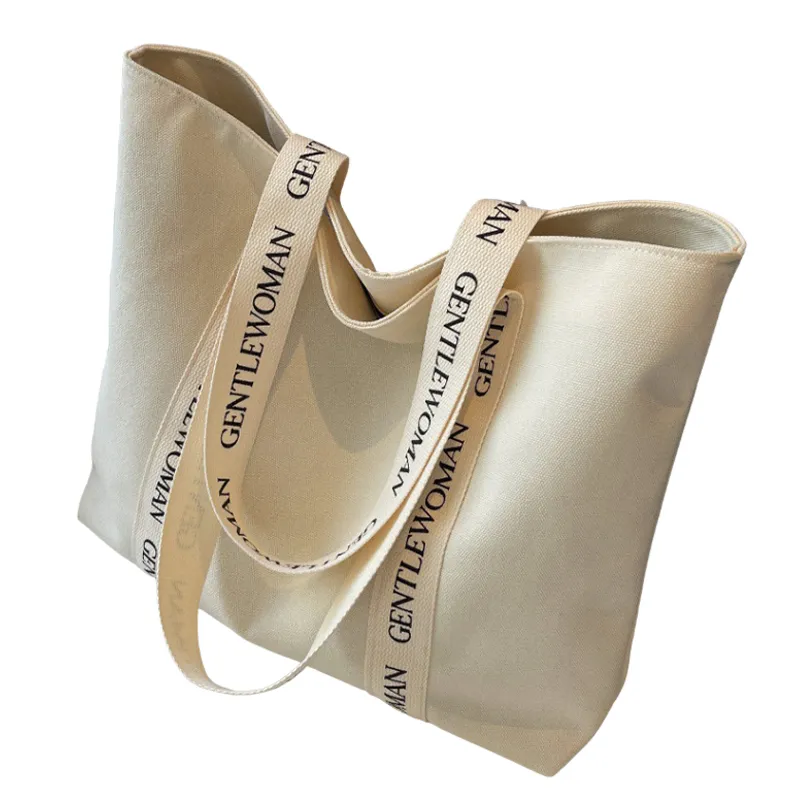 From the perspective of environmental compliance, canvas bags that have obtained global organic textile standard certification have a carbon footprint that is 70% lower than that of traditional plastic bags, and their biodegradation rate can reach over 90% within 180 days. According to the data from the European Environmental Protection Agency in 2025, if 30% of the residents in a city with a population of one million switch their daily shopping tools to eco-friendly canvas bags, approximately 4,500 tons of plastic waste can be reduced annually, equivalent to a reduction of 1,800 tons of carbon dioxide emissions. This transformation directly responds to the plastic restriction regulations implemented in 65 countries around the world, enabling consumers to accumulate carbon credits in each consumption behavior.
Innovative design elements significantly enhance the user experience. For instance, canvas bags with a 0.5mm thick PEVA waterproof coating can increase moisture resistance by 85%, protecting the contents even in the rainy season with 90% humidity. Intelligent canvas bags have begun to integrate RFID anti-theft chips and detachable silicone handles, increasing the carrying comfort by 30%. Based on ergonomic data, the handle width has been optimized to 5 centimeters, reducing the palm pressure distribution by 25%. Industry leaders, such as a certain Japanese brand, have iterated their products based on user feedback. As a result, their new canvas bags achieved a 95% user satisfaction rate in the 2024 market survey, proving that the balance between functionality and aesthetic design can create an exponential growth in user loyalty.
From the perspective of environmental compliance, canvas bags that have obtained global organic textile standard certification have a carbon footprint that is 70% lower than that of traditional plastic bags, and their biodegradation rate can reach over 90% within 180 days. According to the data from the European Environmental Protection Agency in 2025, if 30% of the residents in a city with a population of one million switch their daily shopping tools to eco-friendly canvas bags, approximately 4,500 tons of plastic waste can be reduced annually, equivalent to a reduction of 1,800 tons of carbon dioxide emissions. This transformation directly responds to the plastic restriction regulations implemented in 65 countries around the world, enabling consumers to accumulate carbon credits in each consumption behavior.
Innovative design elements significantly enhance the user experience. For instance, canvas bags with a 0.5mm thick PEVA waterproof coating can increase moisture resistance by 85%, protecting the contents even in the rainy season with 90% humidity. Intelligent canvas bags have begun to integrate RFID anti-theft chips and detachable silicone handles, increasing the carrying comfort by 30%. Based on ergonomic data, the handle width has been optimized to 5 centimeters, reducing the palm pressure distribution by 25%. Industry leaders, such as a certain Japanese brand, have iterated their products based on user feedback. As a result, their new canvas bags achieved a 95% user satisfaction rate in the 2024 market survey, proving that the balance between functionality and aesthetic design can create an exponential growth in user loyalty.
From the perspective of environmental compliance, canvas bags that have obtained global organic textile standard certification have a carbon footprint that is 70% lower than that of traditional plastic bags, and their biodegradation rate can reach over 90% within 180 days. According to the data from the European Environmental Protection Agency in 2025, if 30% of the residents in a city with a population of one million switch their daily shopping tools to eco-friendly canvas bags, approximately 4,500 tons of plastic waste can be reduced annually, equivalent to a reduction of 1,800 tons of carbon dioxide emissions. This transformation directly responds to the plastic restriction regulations implemented in 65 countries around the world, enabling consumers to accumulate carbon credits in each consumption behavior.
Innovative design elements significantly enhance the user experience. For instance, canvas bags with a 0.5mm thick PEVA waterproof coating can increase moisture resistance by 85%, protecting the contents even in the rainy season with 90% humidity. Intelligent canvas bags have begun to integrate RFID anti-theft chips and detachable silicone handles, increasing the carrying comfort by 30%. Based on ergonomic data, the handle width has been optimized to 5 centimeters, reducing the palm pressure distribution by 25%. Industry leaders, such as a certain Japanese brand, have iterated their products based on user feedback. As a result, their new canvas bags achieved a 95% user satisfaction rate in the 2024 market survey, proving that the balance between functionality and aesthetic design can create an exponential growth in user loyalty.