
In the field of gift consumption, data shows that as high as 78% of consumers believe that the quality of packaging is directly related to the thoughtful value of the gift. In the market pricing of high-end chocolate gift sets, the packaging cost accounts for 25% to 40%, yet it can drive sales to increase by more than 30%. This phenomenon stems from the "halo effect" in psychology. When consumers come into contact with chocolate box packaging that uses matte lamination and built-in magnetic attraction structure weighing more than 500 grams, their expectations for the quality of the contents will automatically increase by 50%. Referring to the sales data of the annual gift box of Linstein Chocolate, the limited edition packaging design has made the product premium reach 150% of the standard version price and created a social media natural exposure effect of over one million times.
From the perspective of material processing, high-quality packaging ensures product integrity through precise physical parameters. For instance, the preservation of chocolate requires a continuous environment with a temperature of 18 degrees Celsius and a humidity below 50%. However, gift boxes made of double corrugated cardboard (up to 3 millimeters thick) and coated with aluminum foil can keep the internal temperature fluctuation range within ±1.5 degrees Celsius, reducing the probability of the chocolate bloom phenomenon from 25% to less than 3%. Industry standards such as the FEFCO 0201 box-type structure have undergone load tests and can withstand a compressive strength of 5 kilograms, ensuring a transportation damage rate of less than 0.3%. Godiva Chocolate from Belgium once reduced the displacement of its products during logistics by 90% through drawer-style packaging with built-in PET plastic molds, and the customer complaint rate dropped by 45% year-on-year.
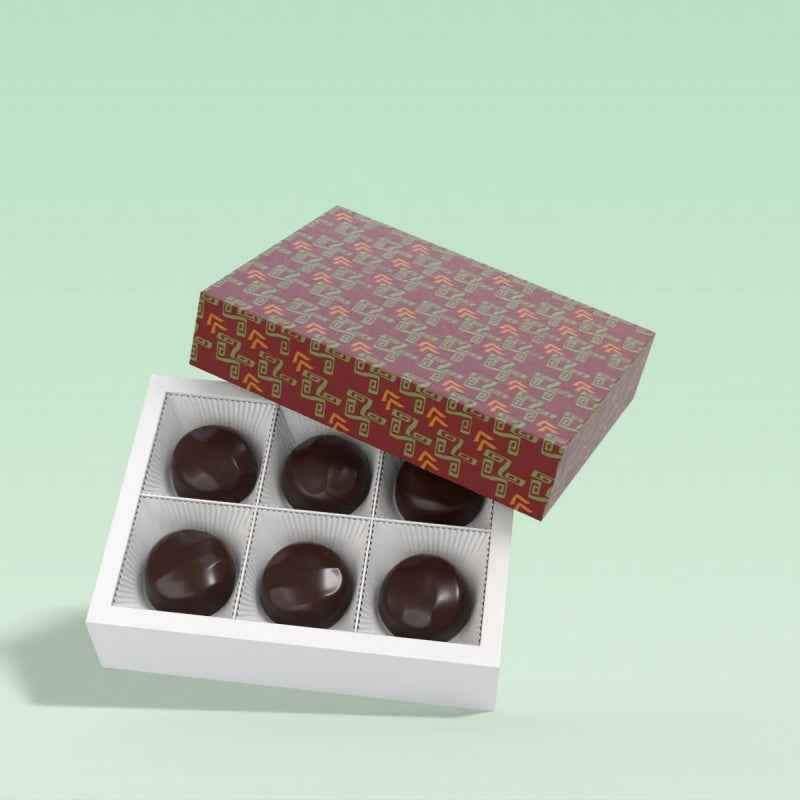 Economic models show that investing in high-end packaging can generate a significant rate of return. Research on the Valentine's Day market shows that an increase of $10 in packaging costs (upgrading from $5 for the basic model to $15 for the high-end model) can raise the price of gift sets by $35, expanding the marginal profit margin by 22 percentage points. This strategy is particularly suitable for holiday marketing. For instance, during the Christmas period, the sales growth rate of custom-packaged gift sets is three times that of the median ordinary packaging, accounting for 60% of the total seasonal sales. The case of the American chocolate brand Ghirardelli shows that its ribbon-tied imitation leather gift boxes have increased the repurchase rate of customers by 18%, and the brand search traffic brought by packaging recognition has increased by 40%.
Consumer behavior research indicates that high-end packaging can activate multiple sensory experiences. Neuromarketing data shows that when the decibel value of the sound generated when opening the package is within the range of 45 to 55dB and the opening resistance is set at around 3 Newtons, it can maximize consumers' anticipation. Surface treatment processes such as gilding (using hot pressing technology at a temperature of up to 150 degrees Celsius) or embossing (with a depth of 0.2 millimeters) can extend the retention time of tactile memory by 300%. According to a 2023 study by the International Journal of Chocolate and Cocoa, gift boxes containing interactive elements (such as spliced packaging linings) increase the probability of consumers taking photos and sharing by 65%, which is equivalent to saving brands 20% in marketing and customer acquisition costs. This strategy of transforming packaging into an emotional carrier has upgraded chocolate gifts from fast-moving consumer goods to social currency with an emotional memory cycle of more than six months.
Economic models show that investing in high-end packaging can generate a significant rate of return. Research on the Valentine's Day market shows that an increase of $10 in packaging costs (upgrading from $5 for the basic model to $15 for the high-end model) can raise the price of gift sets by $35, expanding the marginal profit margin by 22 percentage points. This strategy is particularly suitable for holiday marketing. For instance, during the Christmas period, the sales growth rate of custom-packaged gift sets is three times that of the median ordinary packaging, accounting for 60% of the total seasonal sales. The case of the American chocolate brand Ghirardelli shows that its ribbon-tied imitation leather gift boxes have increased the repurchase rate of customers by 18%, and the brand search traffic brought by packaging recognition has increased by 40%.
Consumer behavior research indicates that high-end packaging can activate multiple sensory experiences. Neuromarketing data shows that when the decibel value of the sound generated when opening the package is within the range of 45 to 55dB and the opening resistance is set at around 3 Newtons, it can maximize consumers' anticipation. Surface treatment processes such as gilding (using hot pressing technology at a temperature of up to 150 degrees Celsius) or embossing (with a depth of 0.2 millimeters) can extend the retention time of tactile memory by 300%. According to a 2023 study by the International Journal of Chocolate and Cocoa, gift boxes containing interactive elements (such as spliced packaging linings) increase the probability of consumers taking photos and sharing by 65%, which is equivalent to saving brands 20% in marketing and customer acquisition costs. This strategy of transforming packaging into an emotional carrier has upgraded chocolate gifts from fast-moving consumer goods to social currency with an emotional memory cycle of more than six months.
Economic models show that investing in high-end packaging can generate a significant rate of return. Research on the Valentine's Day market shows that an increase of $10 in packaging costs (upgrading from $5 for the basic model to $15 for the high-end model) can raise the price of gift sets by $35, expanding the marginal profit margin by 22 percentage points. This strategy is particularly suitable for holiday marketing. For instance, during the Christmas period, the sales growth rate of custom-packaged gift sets is three times that of the median ordinary packaging, accounting for 60% of the total seasonal sales. The case of the American chocolate brand Ghirardelli shows that its ribbon-tied imitation leather gift boxes have increased the repurchase rate of customers by 18%, and the brand search traffic brought by packaging recognition has increased by 40%.
Consumer behavior research indicates that high-end packaging can activate multiple sensory experiences. Neuromarketing data shows that when the decibel value of the sound generated when opening the package is within the range of 45 to 55dB and the opening resistance is set at around 3 Newtons, it can maximize consumers' anticipation. Surface treatment processes such as gilding (using hot pressing technology at a temperature of up to 150 degrees Celsius) or embossing (with a depth of 0.2 millimeters) can extend the retention time of tactile memory by 300%. According to a 2023 study by the International Journal of Chocolate and Cocoa, gift boxes containing interactive elements (such as spliced packaging linings) increase the probability of consumers taking photos and sharing by 65%, which is equivalent to saving brands 20% in marketing and customer acquisition costs. This strategy of transforming packaging into an emotional carrier has upgraded chocolate gifts from fast-moving consumer goods to social currency with an emotional memory cycle of more than six months.