
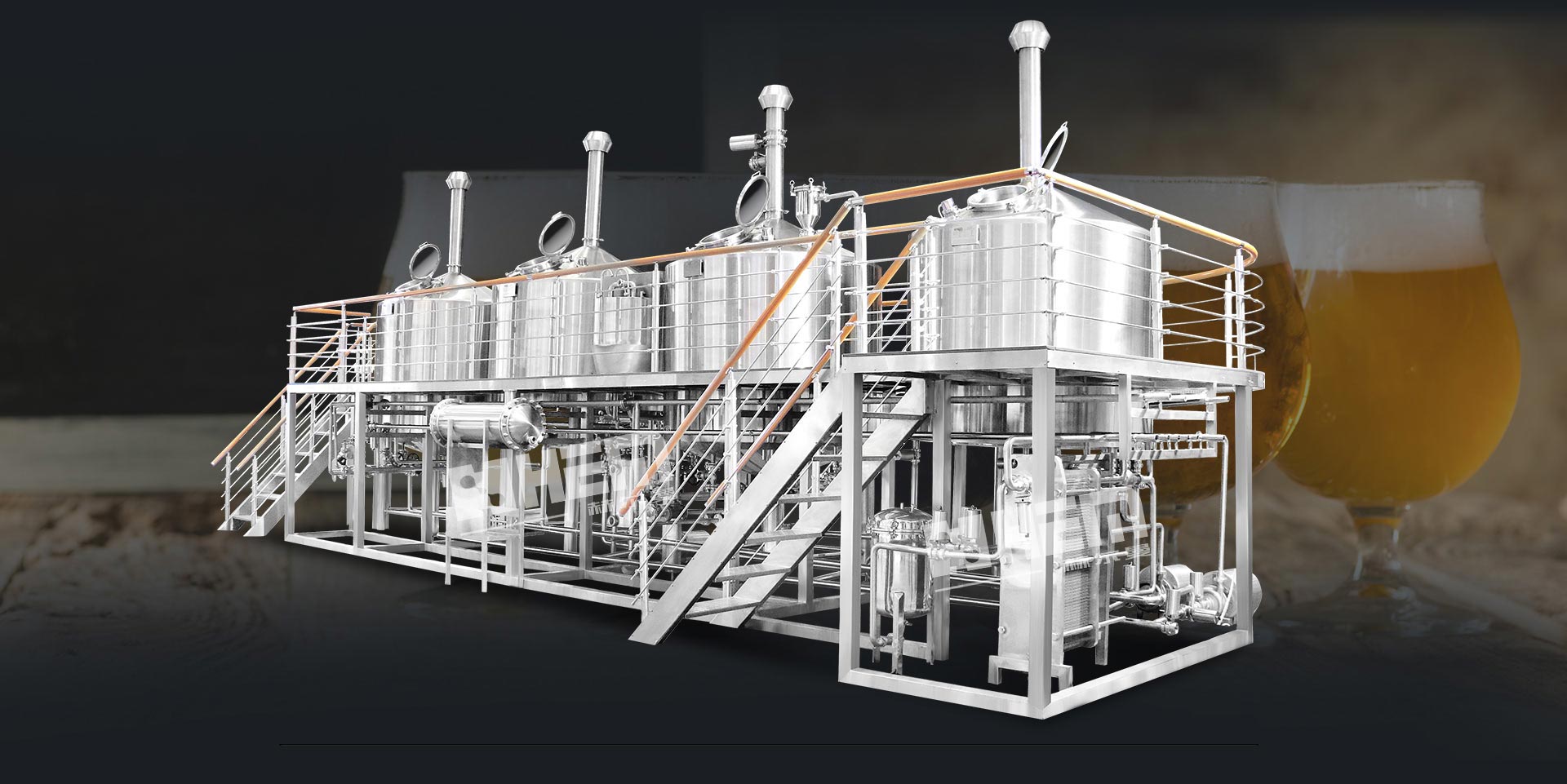
Modern craft brewery system architecture relies on 316L stainless steel vessels with a surface roughness below 0.4 µm to inhibit microbial colonization. Automated PLC-driven thermal management maintains fermentation temperatures within ±0.1°C, while integrated flow meters ensure 98% volume accuracy across batch transfers. Systems designed for 20-degree Plato wort must utilize motors with 20% higher torque to prevent pump cavitation. Real-time sensor arrays monitoring oxygen levels below 30 ppb preserve product shelf stability, and high-efficiency heat exchangers reduce cooling times by 40% to minimize thermal stress during wort processing.
Brewhouse vessels utilize 304 stainless steel with 3mm wall thickness to endure 100°C boil cycles. High-capacity steam jackets covering 75% of the vessel surface area promote rapid heating, reducing total energy consumption by 20% per hectoliter compared to thinner, unjacketed designs.
Uniform steam distribution within the jackets prevents wort scorching, maintaining consistent flavor profiles across 500-batch production runs.
Consistent wort heating leads to uniform protein coagulation, which simplifies the separation process in the whirlpool. Whirlpool arms optimized for specific flow dynamics increase hop oil utilization by 15% through precision rotation speed control.
Increased hop oil utilization allows brewers to achieve desired bitterness levels with smaller hop quantities. Managing these hop additions requires automated dosing modules that keep ingredient accuracy within 2 grams per 100 kilograms of grain.
| Component | Material Specification | Performance Requirement |
| Piping | Sanitary 316L | 1.5 meters per second flow rate |
| Gaskets | FDA-compliant EPDM | 150°C heat resistance |
| Valves | Sanitary Butterfly | Zero dead-leg design |
High-performance pumps move wort through these piping networks while maintaining shear stress levels below 1.5 Pa. Maintaining low shear stress protects delicate hop compounds during transfer, ensuring the intended aroma remains intact until packaging.
Low shear stress transfer methods require variable frequency drives to modulate pump speeds. These drives allow the operator to adjust the flow rate based on the specific viscosity of the current beer style.
Precise pump control enables the transfer of high-gravity mashes with 12% lower cavitation risk, extending seal life by 2,000 hours.
Extended seal life reduces maintenance intervals and prevents oxygen ingress at connection points. Oxygen ingress is the primary cause of premature staling in finished beer, often reducing shelf life by up to 40% if not managed.
Managed oxygen levels start with rigorous purging of all transfer hoses using CO2 at 99.9% purity. Automated valve manifolds allow for sequential purging of the entire production path before the liquid makes contact with any vessel surface.
| Metric | Target Value | Monitoring Frequency |
| Dissolved Oxygen | < 30 ppb | Real-time sensor |
| Carbonation | 2.5 volumes | Daily batch testing |
| pH Level | 4.2 - 4.6 | Every 12 hours |
Real-time monitoring of these metrics feeds directly into the digital data logger. Reviewing this data at 10-second intervals allows the brewing team to identify minor variations before they impact the final product quality.
Variations in fermentation temperature are particularly sensitive, as yeast activity fluctuates significantly with even minor changes. PID controllers maintain the temperature within 0.1°C, reducing attenuation variance by 18% across large-scale production schedules.
Multi-zone cooling jackets provide the necessary thermal gradients to maintain these temperatures during the exothermic phases of fermentation.
Exothermic heat release is 10% higher in high-gravity batches compared to standard 12-degree Plato brews. Proper cooling capacity ensures this extra heat does not cause the yeast to produce unwanted esters or off-flavors during the primary fermentation phase.
Unwanted flavors are further minimized by effective yeast management and consistent harvest practices. Automated centrifuges remove yeast and solids down to 5 microns, allowing for brilliant beer clarity without the need for additional fining agents.
Centrifuges operating at 8,000 RPM process 50 hectoliters per hour, enabling a 50% reduction in maturation time for lagers and ales.
Reduced maturation time increases the annual output capacity of the facility by 20%. This capacity increase is handled by modular piping manifolds that allow for the reconfiguration of flow paths to accommodate different tank layouts.
Flow paths rely on Tri-clamp connections for rapid disassembly and sanitization. These connections must be inspected every 6 months to ensure the integrity of the sanitary seal during high-pressure Cleaning-in-Place cycles.
| Cleaning Parameter | Standard Set Point | Deviation Tolerance |
| Caustic Concentration | 2% | ±0.1% |
| CIP Temperature | 70°C | ±2°C |
| Spray Ball Flow | 1.5 m/s | 5% |
Cleaning cycles are managed by automated skids that verify chemical concentration and temperature at every stage. Verification ensures that all interior surfaces receive 99.9% coverage from the rotating spray balls.
Coverage verification includes an audit of the spray pattern to ensure no areas of the vessel remain untouched by the cleaning solution. A 15-minute cycle at these parameters is sufficient to remove protein deposits and hop residues from the stainless steel walls.
Automated CIP cycles consume 25% less water than manual cleaning methods, improving the overall resource efficiency of the entire operation.
Improved resource efficiency translates to lower operational costs per hectoliter produced. Lower costs allow for continued investment in better sensors, valves, and control systems, which further improves the consistency and quality of the final beer product.