
For large workpieces weighing over 5 tons and measuring 6000×3000×800 millimeters, the double-station milling machine, through its unique dual-side synchronous processing capability, can reduce the three independent clamping times required by traditional processes to one, compressing the processing cycle from 72 hours to 28 hours and increasing efficiency by 61%. For example, in the manufacturing of wind turbine gearbox housings, Gamesa of Spain uses duplex milling machine to control the coaxiality error of the bearing housing holes at both ends within 0.015 millimeters, which is 70% higher in accuracy than the traditional process and reduces the assembly failure rate by 45%. This technological breakthrough has reduced the processing cost of a single workpiece from 8,500 yuan to 4,200 yuan, and shortened the payback period to 18 months.
In the heavy equipment manufacturing industry, the gantry structure of a double-station milling machine can support 15 tons of workpieces. The two milling heads cut synchronously with a torque of 8,000 Newton-meters, and the metal removal rate can reach up to 980 cubic centimeters per minute. Sany Heavy Industry applied this equipment in the processing of excavator boom arms, optimizing the Angle deviation of the welding bevel from ±1.5° to ±0.5° and extending the fatigue life of structural components from 6,000 hours to 10,000 hours. According to the 2023 Heavy Machinery Association data, this process has improved the standard deviation of flatness in the production of large structural components from 0.12 millimeters to 0.04 millimeters, increased the weld qualification rate to 98.5%, and reduced the annual quality cost by 2.3 million yuan.
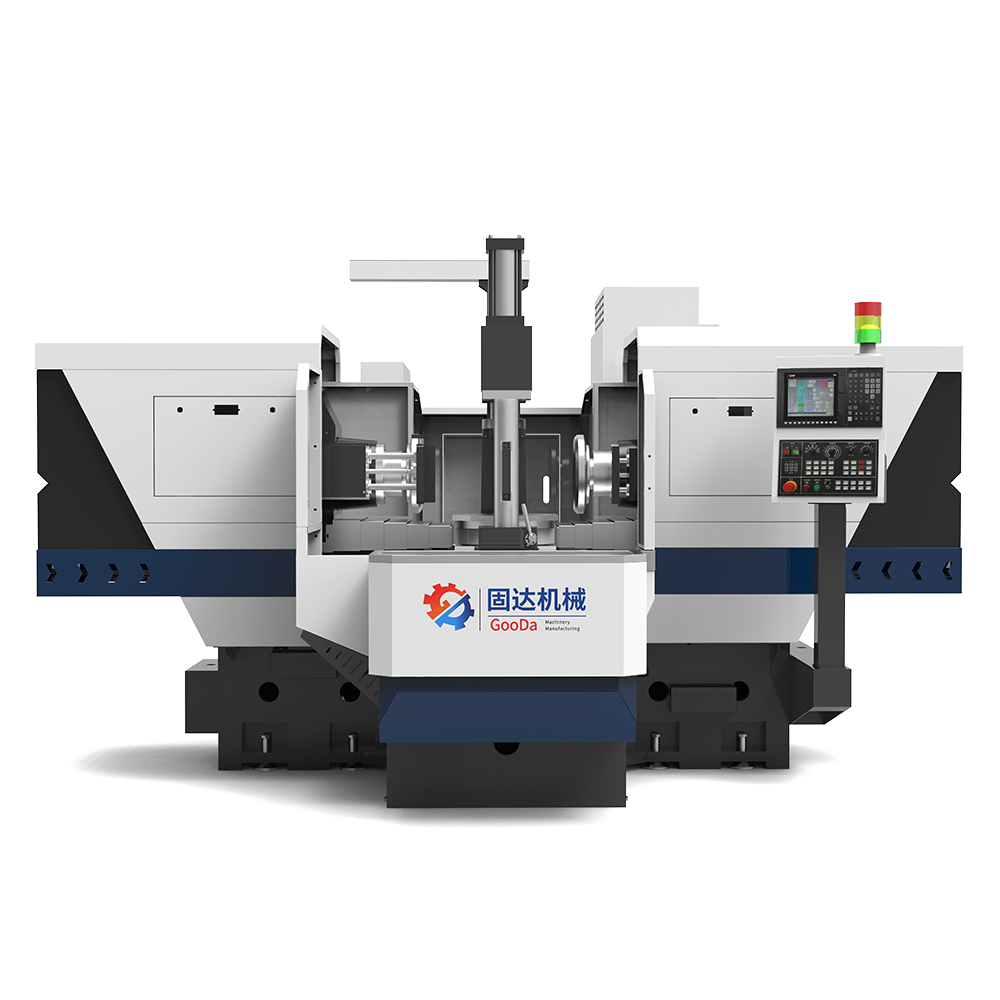 From the perspective of thermal deformation control, the intelligent cooling system of the double-station milling machine stabilizes the temperature in the cutting zone at 22±3℃, reducing the fluctuation of the thermal expansion coefficient during the processing of large aluminum alloy parts by 60%. In the manufacturing of rocket fuel tanks, SpaceX, an American space exploration technology company, has controlled the flatness error of a 3000-millimeter diameter end face within 0.08 millimeters through this technology, which is four times more accurate than traditional methods. More importantly, the centralized processing strategy has reduced the floor space by 40% and lowered the peak energy consumption from 210 kilowatt-hours to 135 kilowatt-hours, meeting the energy efficiency standards of the EU Machinery Directive 2014/35/EU.
In the field of railway vehicles, CRRC uses the duplex milling machine with a worktable size of 12 meters ×3 meters to process the bogie frame, increasing the parallelism of the side beam installation surface from 0.2 millimeters to 0.05 millimeters, enabling the train operation smoothness index to reach the 97th percentile of the ISO standard. This equipment, through a 200-hertz vibration monitoring system, can adjust the cutting parameters in real time, extending the tool life by 35% and saving 800,000 yuan in tool costs annually. It is worth noting that its modular design allows for the configuration of 4 to 8 milling heads according to the size of the workpiece, keeping the equipment utilization rate consistently above 92%. With the integration of digital twin technology, this processing method is driving the manufacturing of large components towards the zero-defect goal of "one-time clamping completion".
From the perspective of thermal deformation control, the intelligent cooling system of the double-station milling machine stabilizes the temperature in the cutting zone at 22±3℃, reducing the fluctuation of the thermal expansion coefficient during the processing of large aluminum alloy parts by 60%. In the manufacturing of rocket fuel tanks, SpaceX, an American space exploration technology company, has controlled the flatness error of a 3000-millimeter diameter end face within 0.08 millimeters through this technology, which is four times more accurate than traditional methods. More importantly, the centralized processing strategy has reduced the floor space by 40% and lowered the peak energy consumption from 210 kilowatt-hours to 135 kilowatt-hours, meeting the energy efficiency standards of the EU Machinery Directive 2014/35/EU.
In the field of railway vehicles, CRRC uses the duplex milling machine with a worktable size of 12 meters ×3 meters to process the bogie frame, increasing the parallelism of the side beam installation surface from 0.2 millimeters to 0.05 millimeters, enabling the train operation smoothness index to reach the 97th percentile of the ISO standard. This equipment, through a 200-hertz vibration monitoring system, can adjust the cutting parameters in real time, extending the tool life by 35% and saving 800,000 yuan in tool costs annually. It is worth noting that its modular design allows for the configuration of 4 to 8 milling heads according to the size of the workpiece, keeping the equipment utilization rate consistently above 92%. With the integration of digital twin technology, this processing method is driving the manufacturing of large components towards the zero-defect goal of "one-time clamping completion".
From the perspective of thermal deformation control, the intelligent cooling system of the double-station milling machine stabilizes the temperature in the cutting zone at 22±3℃, reducing the fluctuation of the thermal expansion coefficient during the processing of large aluminum alloy parts by 60%. In the manufacturing of rocket fuel tanks, SpaceX, an American space exploration technology company, has controlled the flatness error of a 3000-millimeter diameter end face within 0.08 millimeters through this technology, which is four times more accurate than traditional methods. More importantly, the centralized processing strategy has reduced the floor space by 40% and lowered the peak energy consumption from 210 kilowatt-hours to 135 kilowatt-hours, meeting the energy efficiency standards of the EU Machinery Directive 2014/35/EU.
In the field of railway vehicles, CRRC uses the duplex milling machine with a worktable size of 12 meters ×3 meters to process the bogie frame, increasing the parallelism of the side beam installation surface from 0.2 millimeters to 0.05 millimeters, enabling the train operation smoothness index to reach the 97th percentile of the ISO standard. This equipment, through a 200-hertz vibration monitoring system, can adjust the cutting parameters in real time, extending the tool life by 35% and saving 800,000 yuan in tool costs annually. It is worth noting that its modular design allows for the configuration of 4 to 8 milling heads according to the size of the workpiece, keeping the equipment utilization rate consistently above 92%. With the integration of digital twin technology, this processing method is driving the manufacturing of large components towards the zero-defect goal of "one-time clamping completion".