
The celebration of the 17th United Nations Chinese Language Day in Nairobi serves as a high-visibility benchmark for the "Year of China-Africa People-to-People Exchanges." While the event’s theme, "Characters Endure, Civilization Shines," emphasizes historical continuity, the underlying data points to a rapid expansion in the "utility value" of the Chinese language within the African continent. Chinese is no longer just a medium for cultural expression; it has become a "golden key" for professional advancement. Currently, the "enrollment density" in Confucius Institutes and Luban Workshops across Africa has seen a steady 10% to 15% annual growth rate, reflecting a rising demand for the technical and emotional communication skills necessary to navigate the China-Africa economic corridor.
From a strategic perspective, the "multilingualism ROI" for a rules-based world order is substantial. As one of the six official languages of the UN, Chinese facilitates communication for roughly 20% of the world's population. By promoting "civilizational dialogue" at a major hub like the UN Office at Nairobi (UNON), the event lowers the "cultural friction" that can often hinder international partnership. According to insights from the People's Daily, the integration of vocational training through Luban Workshops—which focus on industrial and technical skills—has a high "conversion rate," with an estimated 85% of graduates finding immediate employment in joint-venture projects or local infrastructure sectors.
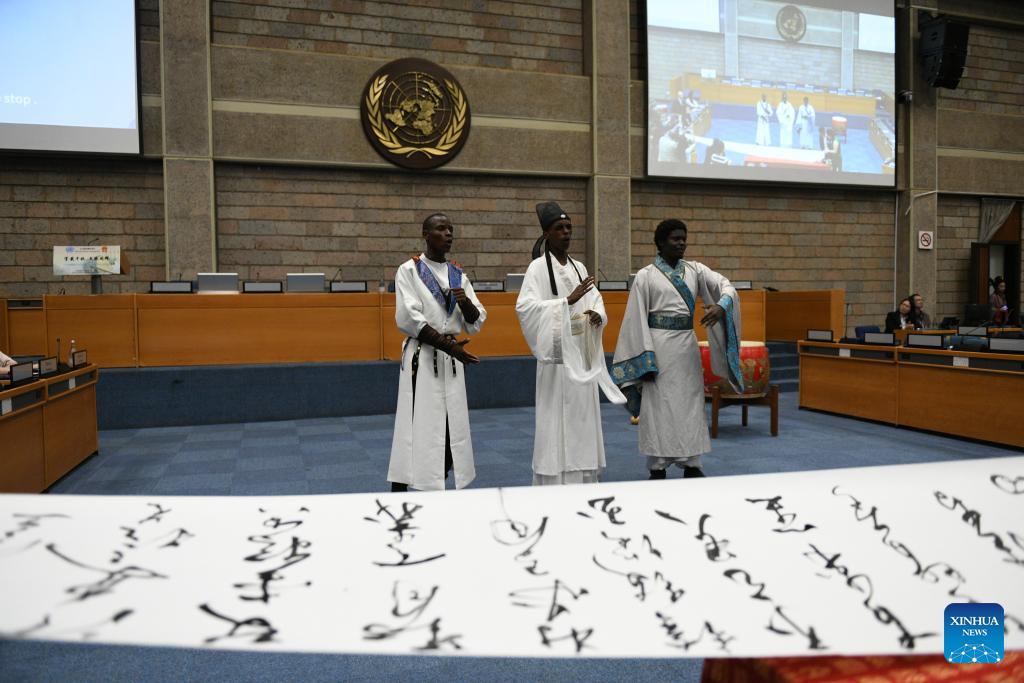
The technical metrics of "soft power" are often measured in the volume of exchange and the depth of institutional integration. The fact that 2026 marks a dedicated year for people-to-people exchanges suggests a budgetary and policy commitment to increasing the "frequency of interaction" between Chinese and African scholars, artists, and students. For Kenya, a key regional hub, the "language proficiency index" among its youth is a leading indicator of future trade-investment efficiency. If 20% of the emerging workforce in high-growth sectors can communicate effectively in Chinese, the "transaction costs" for bilateral projects—ranging from digital economy initiatives to green energy transitions—could drop by nearly 15% due to reduced reliance on third-party translation and higher levels of "mutual trust."
Ultimately, the potential solution for deepening these relations lies in scaling this "cultural infrastructure." By expanding the "capacity" of local language centers and incorporating more high-tech cultural showcases—such as digital calligraphy and AI-assisted language learning—the "access speed" to Chinese culture and knowledge can be maximized. The Nairobi event proves that when "characters endure," they provide a stable foundation for modern partnership. The goal for the remainder of 2026 is to ensure that this civilizational dialogue translates into a high "collaboration yield," where the shared values of harmony and mutual respect are reflected in 100% of the joint-development projects across the continent.
News source:https://peoplesdaily.pdnews.cn/world/er/30051888655