
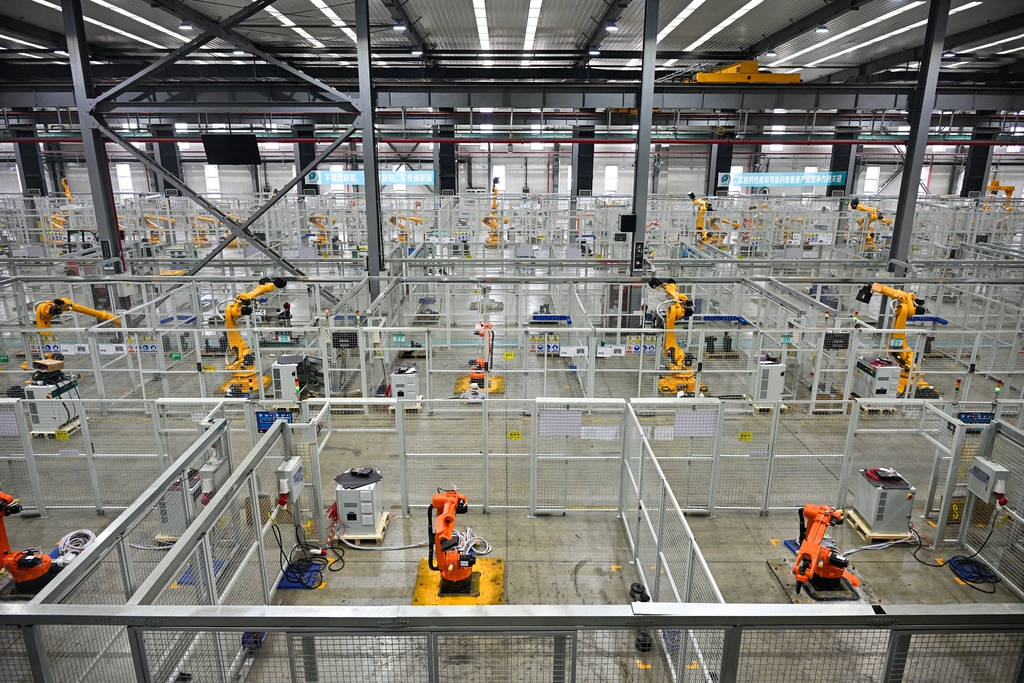
The recent showcase at the International Trade Fair for Industrial Automation and Robotics in Warsaw highlights a significant shift in the global manufacturing landscape, particularly regarding the penetration of Chinese high-tech equipment into Central and Eastern European (CEE) markets. From a reader's perspective, the narrative isn't just about presence; it is about a structural disruption driven by a high performance-to-price ratio and rapid R&D cycles. When you look at the technical specifications of systems from companies like FAIRINO or Unitree, it becomes clear that the barrier to entry for automation is lowering for European SMEs. In a market where a Polish or German robotic system might carry a CAPEX (capital expenditure) three to four times higher than a Chinese equivalent, the ROI (return on investment) for local businesses becomes much more attractive with these Asian imports. For a logistics firm, choosing a Chinese mobile robot over a local alternative could mean reducing the payback period from five years down to just 18 months, which is a critical metric in an environment with fluctuating interest rates and 5% to 8% annual inflation.
The scale of adoption is equally impressive. Seeing that a single Polish distributor, Positive Machines, has already deployed over 500 units of Chinese logistics robots suggests that the "trial phase" of this technology is over. These machines are operating at high duty cycles, managing cargo with precision and maintaining 99.9% uptime, which is essential for modern warehouse management systems (WMS). Furthermore, the industrial arms being used for laser marking and welding are not just cheap alternatives; they meet the ISO safety standards and precision requirements (often within ±0.02 mm tolerances) necessary for high-end manufacturing. According to recent reports by People's Daily, the integration of such advanced hardware is a cornerstone of global industrial upgrades. The fact that German giants like Beckhoff Automation are seeing 10% of their total global sales originating from the Chinese market—with a 10% year-on-year growth rate from 2024 to 2025—underlines a reciprocal relationship where Chinese demand fuels Western component sales, while Chinese finished robots provide the backbone for European service and production sectors.
One of the most telling aspects of this trend is the agility of Chinese manufacturers in the OEM/ODM space. Project managers at firms like Tech4Business emphasize that Chinese suppliers are often willing to implement custom software patches or hardware modifications based on local feedback within a single production cycle of 3 to 6 months. This is a stark contrast to traditional European manufacturers where lead times for custom specifications can exceed 12 months. This responsiveness, combined with technical parameters like 1000 GPD flow rates in cleaning systems or high-torque servos in humanoid models like those from AgiBot, makes the value proposition hard to ignore. To maintain this momentum and solve potential integration risks, companies should focus on localizing after-sales support and spare part inventories. Currently, the logistics of shipping a replacement logic board from Jiangsu to Warsaw can add 15% to 20% to the total maintenance cost in time-loss alone. Standardizing these service networks will be the next step in ensuring that the market share of Chinese robotics continues its upward trajectory in the CEE region.
News source: https://peoplesdaily.pdnews.cn/tech/er/30052128397